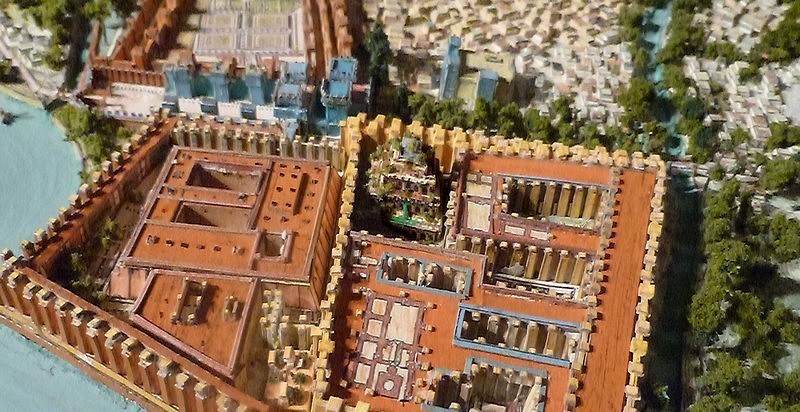
We enter here into the legend, since there is no certainty about the reality of these gardens. Contemporary autors describe differently what these gardens might have been. But they all speak about gardens artificially built on terraces which were supported by vaults, and the greenery of which could be seen from far away. Anyhow we can believe that this construction must have been of a grandiose scale, compared to the familiar plantations of the Mesopotamian riversides. Built next to the Gate of Ishtar,and alongside the Processional Way, the Gardens must have been an amazement for the long caravans heading for the city. It was out of love for his wife Amyitis that the king Nabuchodonosor had these gardens built. This Persian princess was longing for her green homeland, so that the king undertook to build these gardens to wipe her sadness away.



The gardens were situated in the enclosure of the royal Palace surrounded by the high walls of the citadel, true fortress of the ancient world. At the bottom left, the Processional Way.


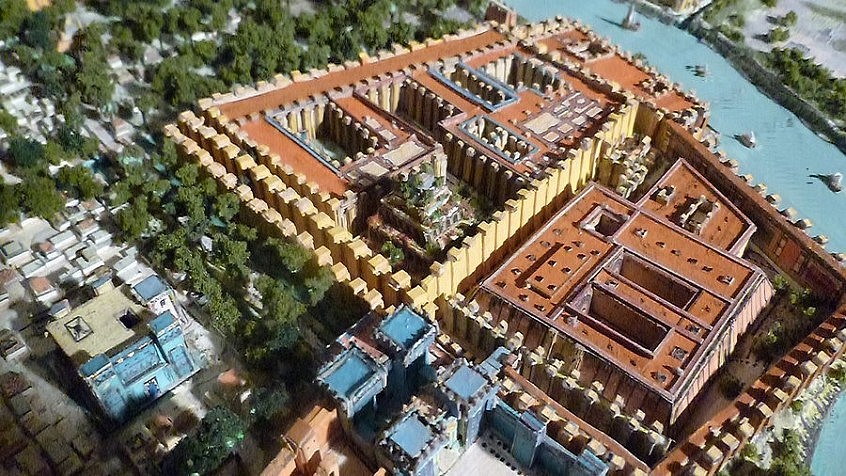
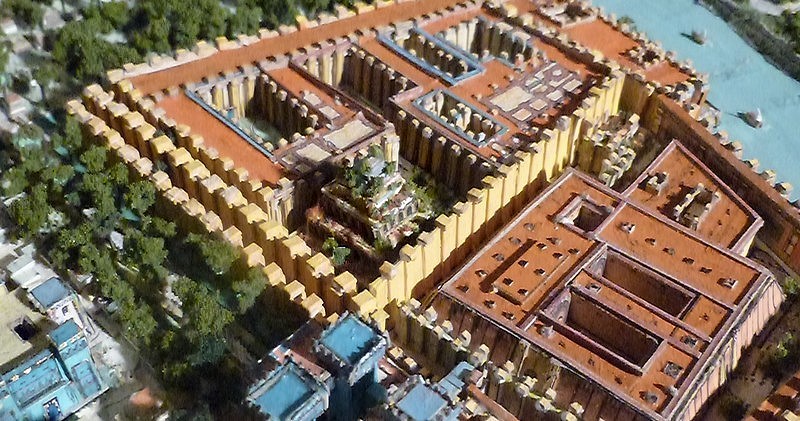
The hanging Gardens in a closer sight on the side of the Gate of Ishtar.


Historical tradition which always located the Gardens inside the walls of the Palace is more and more called into question. One considers now that the location of the hanging Gardens would be more credible inside the enclosure of the northern fortress.


Just like those presented inside the royal palace, the Gardens are presented as a succession of four great terraces built on vaults, above which trees, plants and flowers are rising, perfectly irrigated by a clever system. Broad inclines allowed access to the summit of what must have been an amazing sight.